
Chapter 3-10: Inquiry Processes
Inquiry Image Specifications
Inquiry image specifications define the visual and operational attributes of the image. The Images overlay automatically displays after you select ENTER from the inquiry Frames overlay. The Images overlay for Report-Start and -End, Page-Start and -End, Range-Start and -End and Record-type Frame Classes is shown in Figure 3-10-10, and the Images overlay for Key Entry-type frame classes is shown in Figure 3-10-11.

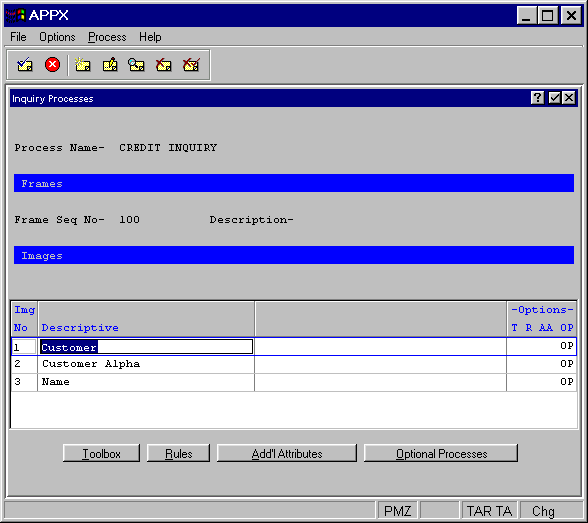
Both inquiry Images overlays contain the following fields:
- Img No
Displays a sequence number that is defaulted by APPX. The image number uniquely identifies each possible image for the frame and is referenced when determining which image, if any, is to display. The first image that is defined in add mode is assigned alternate number 1, and additional frames are assigned a number equal to the highest existing image number, plus 1. This default alternate number can be overridden, but must be unique within the frame. Refer to Chapter 3-1, Images, for a discussion of alternate images in APPX.
- Descriptive
Identifies this alternate image. This field is used for documentation purposes only.
- Opts
Are indicators that are present whenever documentation (T), rules (R), additional attributes (AA), or optional processes (OP--for key entry images only) have been defined for this process.
The inquiry Images overlays for Report-Start and -End, Page-Start and -End, Range-Start and -End and Record type Frame Classes also contain the following fields:
- Extra Lines
Indicates a number of additional rows to add to the size of the image. This field may contain up to three numeric characters. For non-scrolling frames only, this entry defines the additional number of rows to reserve on the page when determining page breaks. For example, you can use this specification to ensure sufficient room to print at least one record frame beneath a subheading.
- Compress Type
Indicates whether or not to suppress blank lines in an image and, if so, the type of lines to compress. The Compress Type options are:
- NONE. Do not compress.
- EMBEDDED BLANK LINES. Compress embedded blank lines. (Image still occupies the full number of rows.)
- TRAILING BLANK LINES. Compress trailing blank lines.
- EMBEDDED/TRAILING. Compress embedded and trailing blank lines.
The default is NONE.
The following options as described in the corresponding sections are available on the inquiry Image overlays: